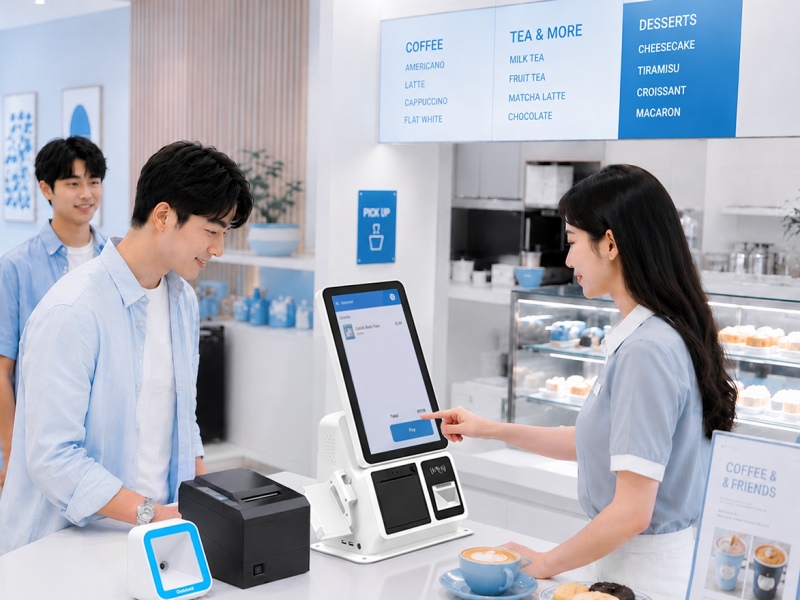
Retailers must balance checkout efficiency, labor costs, customer experience, and store space when planning their checkout areas. Traditional cashier lanes provide direct assistance, while self-checkout terminals allow customers to scan and pay for eligible purchases independently. When evaluating self checkout vs cashier, retailers should consider the total cost of ownership rather than comparing equipment prices alone. In addition, transaction volume, staffing schedules, loss prevention, and customer preferences all affect the final return on investment.
1. Labor Cost: Build a Practical Calculation Model
Labor is one of the main operating expenses in a retail checkout area. Traditional cashier lanes require employees to handle transactions, while self-checkout allows one trained attendant to monitor several terminals, depending on store size and customer needs. However, self-checkout does not eliminate labor entirely because staff may still need to assist customers, verify restricted purchases, and resolve scanning or payment issues.
Retailers can estimate annual labor savings using the following model:
-
Traditional cashier cost: Number of cashier positions × paid hours per year × hourly labor cost.
-
Self-checkout staffing cost: Attendant positions × paid hours per year × hourly labor cost.
-
Net annual labor savings: Traditional cashier cost minus self-checkout staffing cost and other additional operating expenses.
For example, if a store reduces the equivalent of two full-time cashier positions at an annual employment cost of $36,000 each, the theoretical labor cost reduction is $72,000 per year. Nevertheless, retailers should use actual scheduling data and account for any reassigned staff hours before treating this amount as a cash saving.
2. Store Productivity and Peak-Hour Throughput
Checkout performance affects both customer waiting time and how efficiently a store uses its available floor space. Traditional lanes offer personal service, but each lane generally depends on a cashier to process transactions. In comparison, a self-checkout area can accommodate several terminals in a compact layout, potentially helping stores serve more customers during busy periods. The actual throughput depends on basket size, scanning speed, payment methods, age-verification requirements, and the frequency of assistance requests. Therefore, retailers should measure completed transactions per hour rather than assuming every self-checkout terminal will outperform a staffed lane. Stores can compare performance across normal periods, lunch rushes, evenings, and seasonal peaks to identify the most effective configuration.
3. Customer Acceptance and Shopping Experience
Customer acceptance varies by age group, shopping mission, payment preference, and familiarity with self-service technology. Some shoppers value the speed and independence of self-checkout, especially when buying only a few items. Others prefer traditional cashier service for larger baskets, complex transactions, or situations that require personal assistance.
Rather than relying on a universal customer acceptance percentage, retailers should collect data from their own locations. Useful indicators include:
-
Self-checkout adoption rate by time of day.
-
Average transaction time and queue length.
-
Customer satisfaction scores and complaints.
-
Attendant interventions and abandoned transactions.
-
Repeat usage among loyalty program customers.
This approach helps retailers determine whether self-checkout improves the shopping experience for their actual customer base. It also highlights where clearer instructions, accessible payment options, or additional staff support may improve adoption.
4. Loss Prevention and Transaction Control
Self-checkout introduces risks such as missed scans, incorrect produce entries, barcode switching, and accidental duplicate transactions. However, retailers can manage these risks through a combination of technology, store procedures, and staff oversight. The goal is to reduce avoidable losses without creating unnecessary friction for customers. Practical measures include transaction monitoring, random receipt checks where appropriate, exception alerts, clear camera coverage, and regular inventory reconciliation. Retailers should also train attendants to respond consistently when a system flags an unusual transaction. Furthermore, monitoring shrinkage before and after installation helps businesses assess whether their controls are effective.
5. ROI and Payback Period Calculation
A useful return-on-investment model includes initial equipment costs, installation, software, maintenance, staffing changes, and any measurable impact on sales or losses. The payback period estimates how long it takes for net operating benefits to recover the initial investment. Retailers should use conservative assumptions and calculate results with real store data whenever possible.
| ROI Item | Example Assumption | Annual or One-Time Value |
|---|---|---|
| Self-checkout equipment and installation | 4 terminals | $24,000 initial cost |
| Reduced cashier labor cost | 2 equivalent positions | $72,000 annual reduction |
| Self-checkout attendant cost | Additional staffing | $24,000 annual cost |
| Maintenance and software | Estimated operating expense | $4,000 annually |
| Net annual operating benefit | Labor reduction minus added costs | $44,000 |
| Simple payback period | $24,000 ÷ $44,000 | About 6.5 months |
These figures are illustrative only, not a quotation or guaranteed result. They exclude possible changes in shrinkage, payment fees, sales, taxes, and other costs. Based on this simplified example, the equipment investment could be recovered in less than one year if the assumptions hold. However, retailers should recalculate the model using actual labor costs, equipment pricing, transaction volumes, and loss-prevention results before making a purchasing decision.
6. Why a Hybrid Checkout Layout Can Work
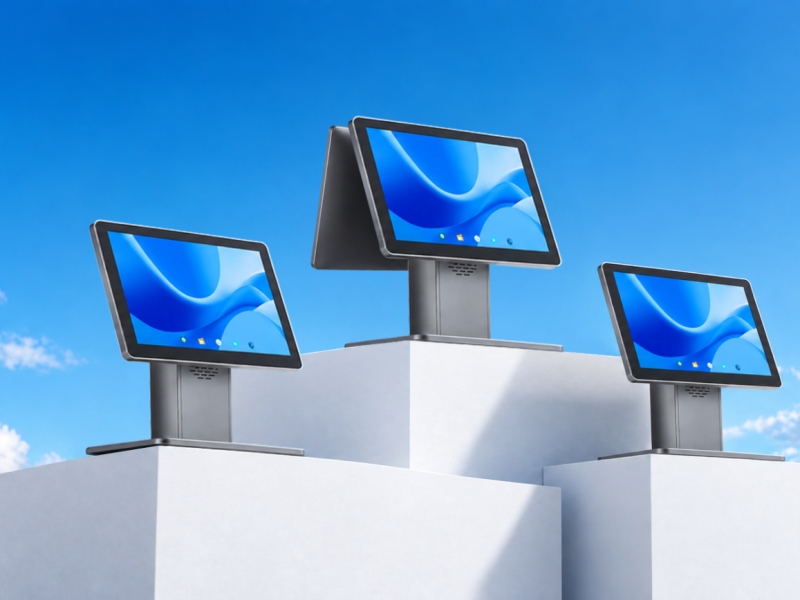
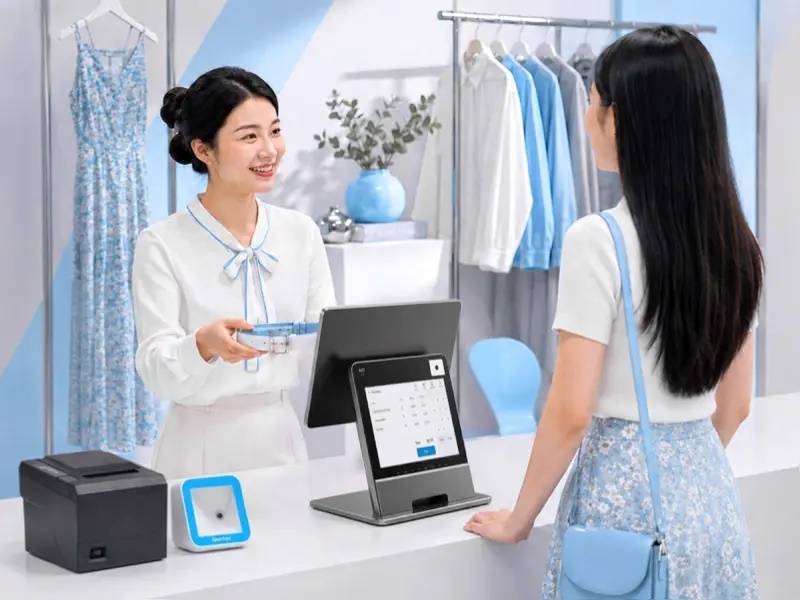
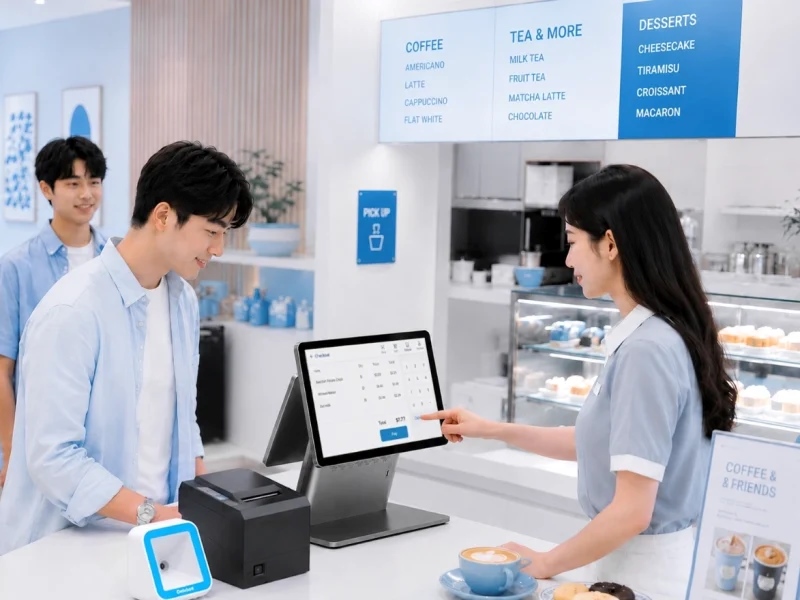
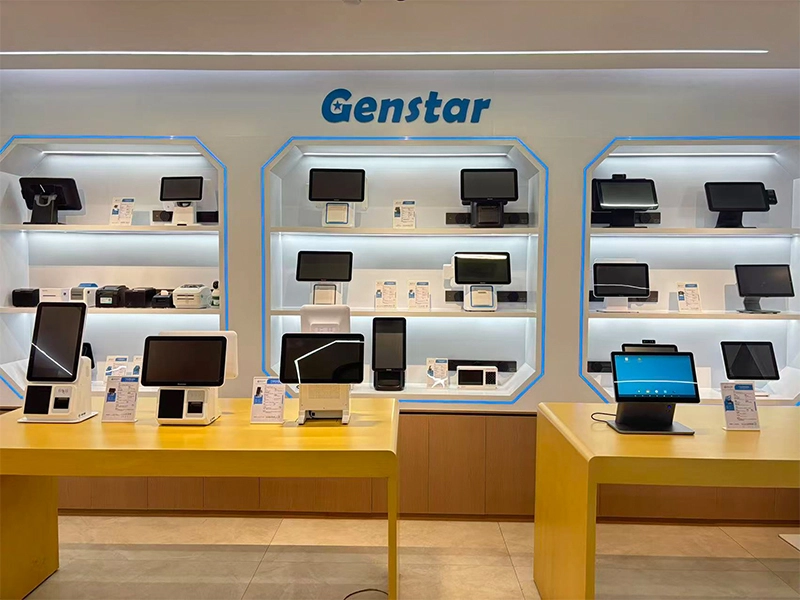
For many retailers, the choice is not simply self-checkout or traditional cashier service. A hybrid layout combines staffed lanes with self-service terminals, allowing customers to choose according to their needs. Traditional lanes can handle large baskets, complicated transactions, and customers who prefer personal assistance, while self-checkout can support smaller purchases and routine payments. The GENSTAR G2 offers a customizable checkout option for different retail environments. Its single- or dual-screen configuration can suit varying store layouts, while an optional built-in 58mm or 80mm thermal printer with an auto cutter supports receipt printing. Retailers should confirm the required software, payment peripherals, and operating-system configuration before selecting a deployment model.
When planning a hybrid layout, retailers should consider three practical factors:
-
Traffic distribution: Place self-checkout terminals where customers can find them easily without blocking store entrances or aisles.
-
Staff coverage: Ensure attendants can monitor terminals and assist customers during busy periods.
-
Flexible capacity: Retain enough staffed checkout capacity for larger purchases, accessibility needs, and complex transactions.
Conclusion
The comparison of self checkout vs cashier depends on a retailer’s labor structure, transaction patterns, customer expectations, and loss-prevention requirements. Self-checkout may reduce some staffing needs and improve checkout flexibility, but equipment, support, and shrinkage costs must also enter the calculation. By measuring real store performance and testing a hybrid layout, retailers can make investment decisions based on operational evidence. With configurable options such as those available on the GENSTAR G2, businesses can assess a checkout setup that aligns with their store format and customer needs.